The LeNoirs of Arichat
The LeNoir Landing is named for Thomas LeNoir, Sr. (b. 1754), a native of Balleroy, France. While stationed as a soldier on the island of St. Pierre, he met and married Esther Poirier, a woman of Acadian descent. Fleeing anti-Catholic persecution from the French revolutionary government, in 1793 a large group of Acadians arrived in Arichat from St. Pierre. Thomas, Esther and two of their children were among this group.
During this time shipbuilding had begun to flourish on Isle Madame. Trained as a locksmith, Thomas LeNoir, Sr. was also a blacksmith, one of the first recorded in the area. No doubt his forge produced materials that were used in the shipping industry and to supply households with tools needed for their small family farms. Where his forge was actually located, however, is not known, and there is no record of him ever owning land on Isle Madame. In the 1811 census, he is recorded as living near Our Lady of Assumption Church in Arichat, some distance away from the site on the Arichat Harbour that bears his name.
His son, Thomas LeNoir, Jr., was also a blacksmith. Records show that it was his forge and first house, and not his father's, that were built around 1818 on part of what is now the LeNoir Landing. Over time, he trained apprentices from all over eastern Canada and the US. He served as one of Arichat's Justices of the Peace and died a very wealthy man.
Thomas LeNoir, Jr. and his first wife, Ursula Victoire Terrio, raised a large family on their 1818 homestead to which other lands were eventually added. Upon Thomas LeNoir Jr.'s death in 1869, that property, which included his original homestead and forge, passed into the hands of his son, Charles LeNoir, who was also a blacksmith by trade. The property remained in the LeNoir family for many years, passing to Thomas LeNoir Jr.'s great grandson, Alva Malzard, in 1903.
The Stone House Mystery
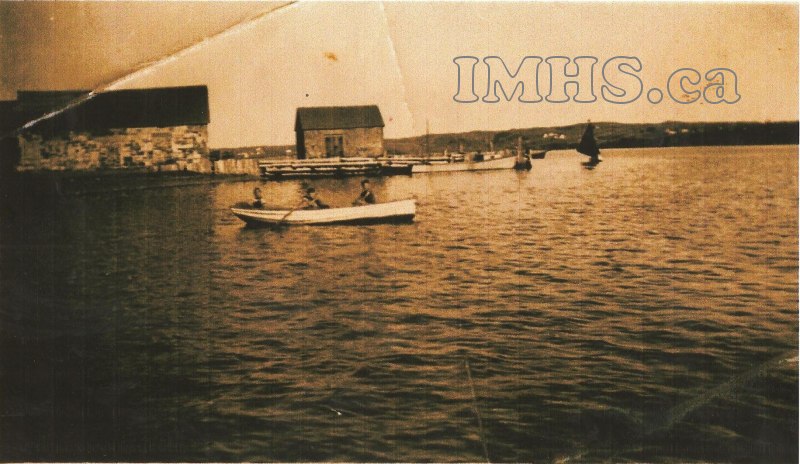
It was long thought that the sandstone building that now houses the LeNoir Forge Museum was the forge that belonged to the LeNoir family for so many years. Research undertaken by the Isle Madame Historical Society, however, shows that not only was the building neither built nor owned by Thomas LeNoir Sr. or Jr., there is no evidence that it was ever used as a forge.
It turns out that the sandstone building that now houses the LeNoir Forge Museum was not built on land owned by the LeNoirs. Rather, it was built on land formally granted to Simon Forest and his sons in 1788, though the family had been living in the area for some time before that. Simon Forest, along with his wife, Marguerite Gautrot, and two of their children, had been exiled from Pisquid (near modern day Windsor) to Weymouth, Massachusetts during the expulsions of the Acadians from Nova Scotia by the British during the 1750s. In 1763, with the end of the war between France and England, Simon Forest and his family left Weymouth and settled on Isle Madame.
He and his sons were granted a number of lots in Arichat in 1788. Among his sons was Simon Forest Jr. who had been born in Massachusetts in 1757. While the Forests owned their various lots collectively as a family, the records show that Simon Forest Jr. was living on one of their large properties on the Arichat Harbour. This lot, like Thomas LeNoir Jr.'s, was to become part of what is now known as the LeNoir Landing. Simon Forest Jr. and his wife, Cecile Boudrot (an Acadian whose family lived in Petit de Grat) ran a tavern and raised eight children on the property. When Simon Forest Jr. died in 1809, the records indicate that the Forest family conveyed the property to his widow, Cecile, and his sons, Michael and Simon (3rd) Forest. The records also indicate that this property was next door to the east of the property on which Thomas LeNoir Jr. had built his house and his forge by 1818.
Two Families, Intertwined
The Forests and the LeNoirs were to become quite close. Simon Forest Jr.'s son, Simon Forest 3rd, married Barbe LeNoir, daughter of Thomas LeNoir Sr. and sister of Thomas LeNoir Jr. The two brothers-in-law eventually ran a sizeable business together and, for a number of years, co-owned at least one large property on the Arichat Harbour, located about a quarter mile to the east of the LeNoir Landing. When Simon Forest 3rd died in 1829, his will named Thomas LeNoir Jr. as one of the principal administrators of his sizeable estate, a position LeNoir continued to hold until his own death in 1869.
Among many of the property transactions Simon Forest 3rd and Thomas LeNoir Jr. engaged in together was the sale of a piece of land in 1826. In July of that year, Simon Forest 3rd and his brother, Michael, sold to Thomas LeNoir Jr. land that had been given to them upon the death of their father, Simon Forest Jr. in 1809. As already noted, that land was next door to the east of land on which Thomas LeNoir Jr. had already built a house and forge by 1818. The Forest brothers did not sell Thomas LeNoir Jr. the entirety of the lot that was in their possession, however. Rather, they sold him half of the lot, the half that bordered his own property. They kept for themselves the eastern half of the lot on which, the record says, a "stone house" had been built. The highly detailed description of the property offered in the record of this land transaction makes it clear that the "stone house" owned by the Forest brothers is the building now known as The LeNoir Forge Museum.
When he died in 1829, Simon Forest 3rd's will bequeathed to his wife, Barbe (LeNoir) Forest, his two large commercial properties on the Arichat waterfront for the duration of her life as long as she remained unmarried. Upon her death or remarriage, the properties were to be given to their children. To his brother, Michael, he left "the half lot of land with its improvements on which the stone house now stands purchased from Messrs Ph & Frs Janvrin & Co." In 1833, however, Michael and the administrators of Simon Forest 3rd's estate (which included Thomas LeNoir Jr. and his widow, Barbe [LeNoir] Forest) agreed that Simon 3rd's widow, Barbe, would continue to live on that property until her death or remarriage. Upon her death or remarriage, the property with the "stone house" was to go to her children.
While the year of Barbe (LeNoir) Forest's death is not known, records in the Registry of Deeds at Arichat show that, by 1841, the property had passed into the hands of her oldest child, Amelia Forest, who was the wife of Captain Constant Terrio. Amelia (Forest) Terrio, in turn, conveyed it to her younger brother, Edmond Forest, in 1847. In 1862, however, the property was seized by the county sheriff to cover Edmond's unpaid debts (after which Edmond sailed to Australia). At the sheriff's auction of the property, Amelia (Forest) Terrio was the highest bidder, and thus the property remained in the hands of Simon Forest 3rd's descendants. It wasn't until Simon Terrio moved to Brooklyn, New York, in 1891, that the property was sold out of the Forest family.
What the Records Reveal
While the records don't reveal a great deal about the nature of the "stone house" or when, exactly, it was built, they do provide some important information. The record of the sale to Thomas LeNoir Jr. of half of the property on which the "stone house" stood clearly demonstrates that it had already been built by 1826. Simon Forest 3rd's will tells us that the "stone house" that stood on his property was "purchased from the Ph and Frs Janvrin and Co". And the records from 1841 and 1847 further describe the building as a "store" erected by Simon Forest 3rd "during his lifetime".
Simon Forest 3rd was twenty when he and his younger brother, Michael, and mother, Cecile, received the property of his father from the Forest family in 1809. Cecile kept the furthest eastern third of the property for herself, and later left it to her youngest son, Peter. Simon and Michael established their own business on their portion of the property. Records describe the two brothers as "victuallers" or "merchants", and as owners and part-owners of several schooners. It seems unlikely that they would have built the "stone house" before Simon 3rd turned twenty, that is, before he and his brother owned the property they received in 1809. The "stone house", therefore, was almost certainly built after 1809 and definitely before 1826. Built as a storehouse and made of stone, it would have offered a secure and highly weather-resistant space for the brothers to hold the provisions they sold to ship owners and captains, along with other merchandise they sold along Nova Scotia's coasts. The security afforded by its stone construction would have been most appreciated during and after the War of 1812, when American privateers threatened shipping and fishing operations along the Strait of Canso.
A Rare Stone Building
That it is made of stone is, however, the very thing that makes the building so highly unusual. Free-standing stone buildings are a rarity in Nova Scotia, where most houses and even public buildings were, for more than two hundred years, generally made of wood. Especially in the early 1800s, stone construction tended to be reserved for military structures, rare government buildings or grand residences for the rich. Census records show that there were no stonemasons living on Isle Madame in the early 1800s, and the sandstone out of which the "stone house" was built is not native to the Island. The nearest sandstone quarry, in Port Hood, ceased functioning in the 1750s.
For these reasons, it should perhaps be unsurprising that Simon Forest 3rd claims that his "stone house" was "purchased from the Ph and Frs Janvrin and Co." The Phillip and Francis Janvrin Company was a hugely successful Jersey fishing and shipbuilding enterprise that had come to Isle Madame as early as 1783. They were granted the entirety of Janvrin's Island for their operations and held several large shore lots in Arichat and West Arichat. By 1798, they were the largest ship builders in the area.
Their business interests were not confined to Isle Madame, however. Their operations also extended to the Magdelene Islands and to the Gaspe area of Quebec where, among other things, sandstone was plentiful. Unlike Nova Scotia, where the vast majority of structures are made of wood, the vast majority of structures on the Island of Jersey, where the Phillip and Francis Janvrin Company was based, were (and continue to be) made of stone. The Island was, and remains, home to a large number of highly skilled stonemasons. Wherever the sandstone used to construct Simon Forest 3rd's "stone house" came from, it appears that it arrived on Isle Madame, likely as ballast, in a Janvrin Company ship. That the Janvrin Company also supplied a skilled stonemason or two to oversee the construction of the "stone house" that Simon Forest 3rd "purchased" from it, is more than highly likely.
Why Simon Forest 3rd decided to build a storehouse out of stone on the lot he owned with his brother, Michael, on the shore of the Arichat Harbour will likely never be known. What is remarkable is that the records indicate that he didn't build just the "stone house" that stands on the Landing today. In 1823 he built a second one, about a quarter of a mile east on another lot that he owned. While that "stone house" no longer exists, there is a postcard of it in the Isle Madame Historical Society's archives. It shows that that "stone house" was still standing in 1911.
From Ice House to Museum
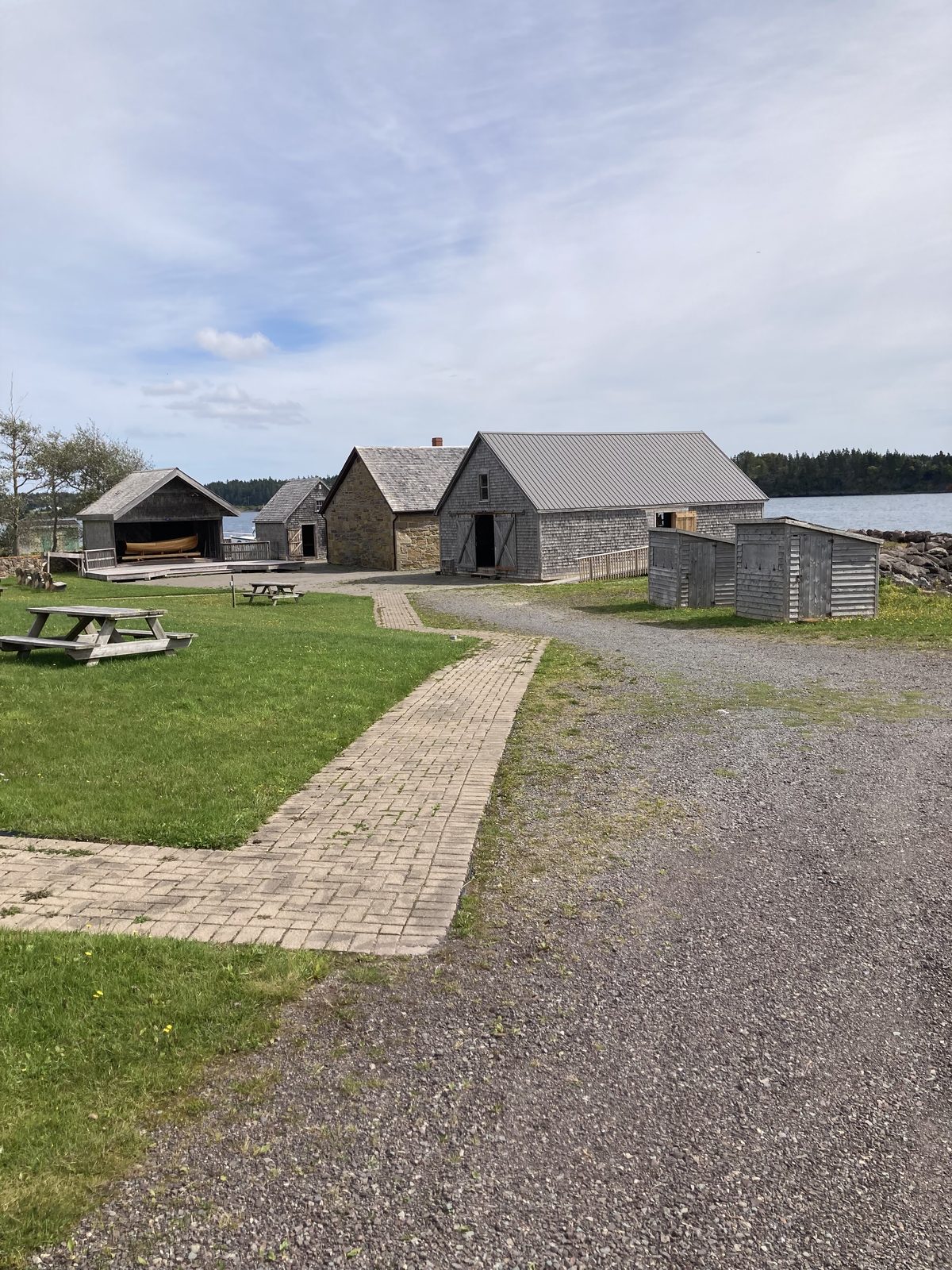
After the "stone house" was sold out of the family by Simon Forest 3rd's grandson, Simon Terrio, in 1891, it changed hands several times. For many years, it was used as an ice house. By the 1960s this rare stone building was in a state of complete disrepair, however. The Isle Madame Board of Trade, in partnership with The Municipality of the County of Richmond, took on the responsibility for its restoration as a 1967 Centennial and municipal project. By this time, the "stone house" was widely believed to have been Thomas LeNoir Sr.'s forge and, as a result, that is what it became.
A one-and-a-half-storey building, at the time of its restoration the north and south walls of the "stone house" were practically intact. Many stones, however, were missing from its eastern wall, and the western wall had to be completely rebuilt. The colour, texture and cut of the sandstone brought in to replace the missing stones was intended to be a good match with the original. As a result, it is extremely difficult to distinguish the modern stones from the ones that are 200 or more years old.
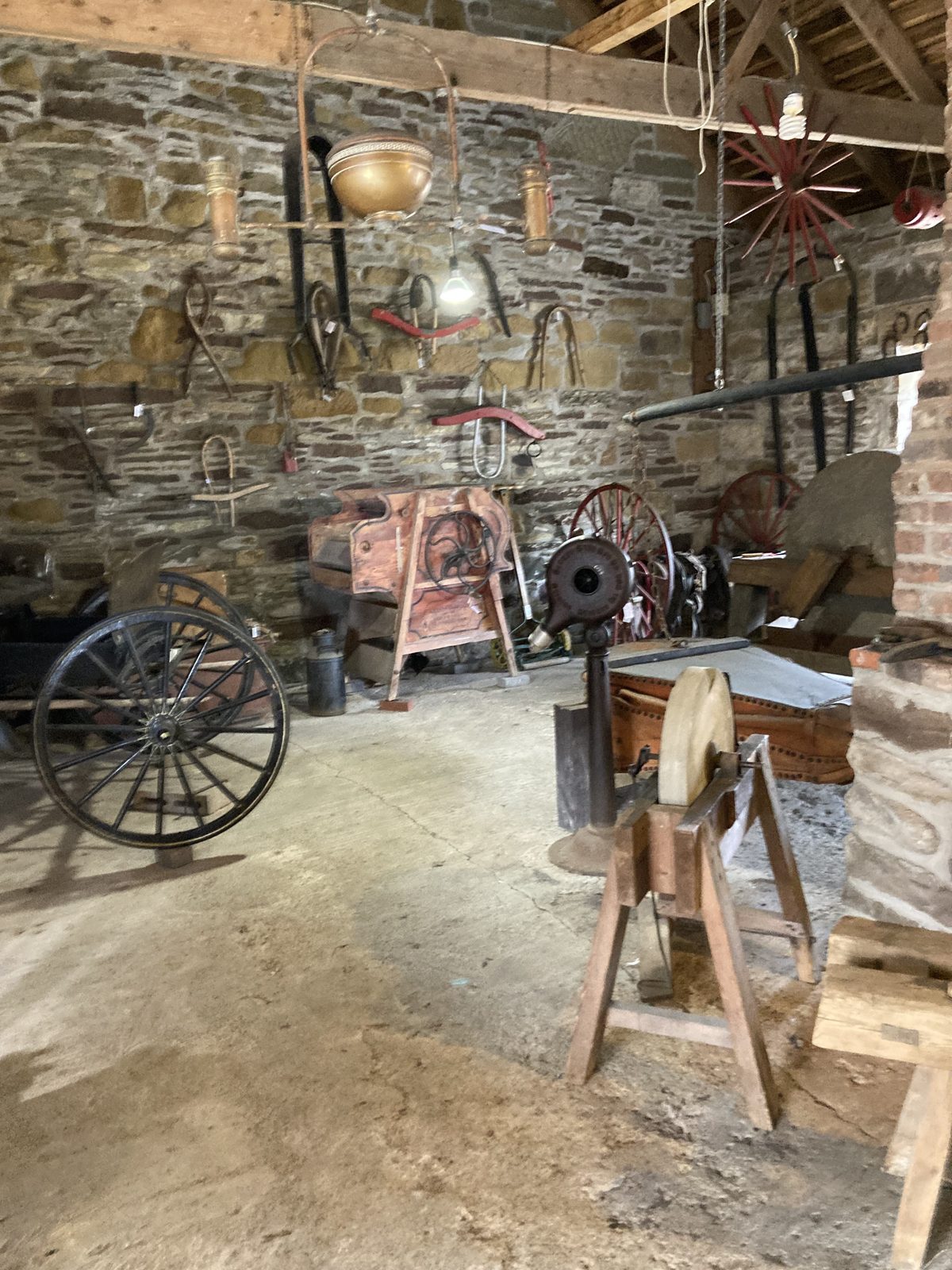
Today the LeNoir Forge Museum houses a working forge operated by volunteers, and a collection of tools and artifacts that tell some of the stories of the people of Isle Madame.
Visit the museum
The LeNoir Forge Museum is open through the season, with a working forge and a collection that tells the stories of the people of Isle Madame.